hi ma'am mytch!
Physics · Photography · Portfolio

Welcome to
Optics

A visual exploration of light across five distinct conditions—from the open sky to the glow of a screen.

"After taking photos in different lighting conditions, how does combining the classical view of light as a wave with the quantum view of light as photons help you understand why cameras capture clearer images in bright light and struggle in dim light?"
By Jieu S. Gorospe  ·  STEM 22

Wave & Photon

Light behaves as both a wave and a stream of photons—and that duality is the key to understanding why your camera loves sunlight and hates a dark room.

From the wave perspective, light carries energy proportional to its frequency. When many waves arrive simultaneously, they constructively interfere to produce a bright, continuous signal that a camera sensor can read cleanly and with minimal noise.

From the quantum (photon) perspective, each photon carries a discrete packet of energy: E = hf. In bright conditions, enormous numbers of photons hit the sensor every second. Each photon knocks loose an electron via the photoelectric effect—more photons mean more electrons, which means a stronger, more accurate electrical signal.

In dim light, fewer photons arrive. The sensor must amplify a weak signal, and that amplification also magnifies random thermal noise. The result is the grain and color inaccuracy we call "noise." Bright light floods the sensor with photons, overwhelms noise, and produces sharp, vivid images.


01 / 05
Daylight

A Happy Exposure

Natural, abundant photons from the sun flood the sensor—minimal noise, maximum clarity. The wave amplitude is high and the photon count is enormous.

Daylight collage click to expand
Top-left
High noon: Foggy mist from a fire extinguisher caught in direct light.
Top-right
Late morning: Brilliant sunny skies providing a high signal-to-noise ratio.
Bottom-left
Morning sunshine: Light filtering through foliage, creating intricate diffraction patterns.
Bottom-right
Late morning: Clear, unobstructed skies offering perfect exposure.

02 / 05
Moonlight

The Blue Against the Red

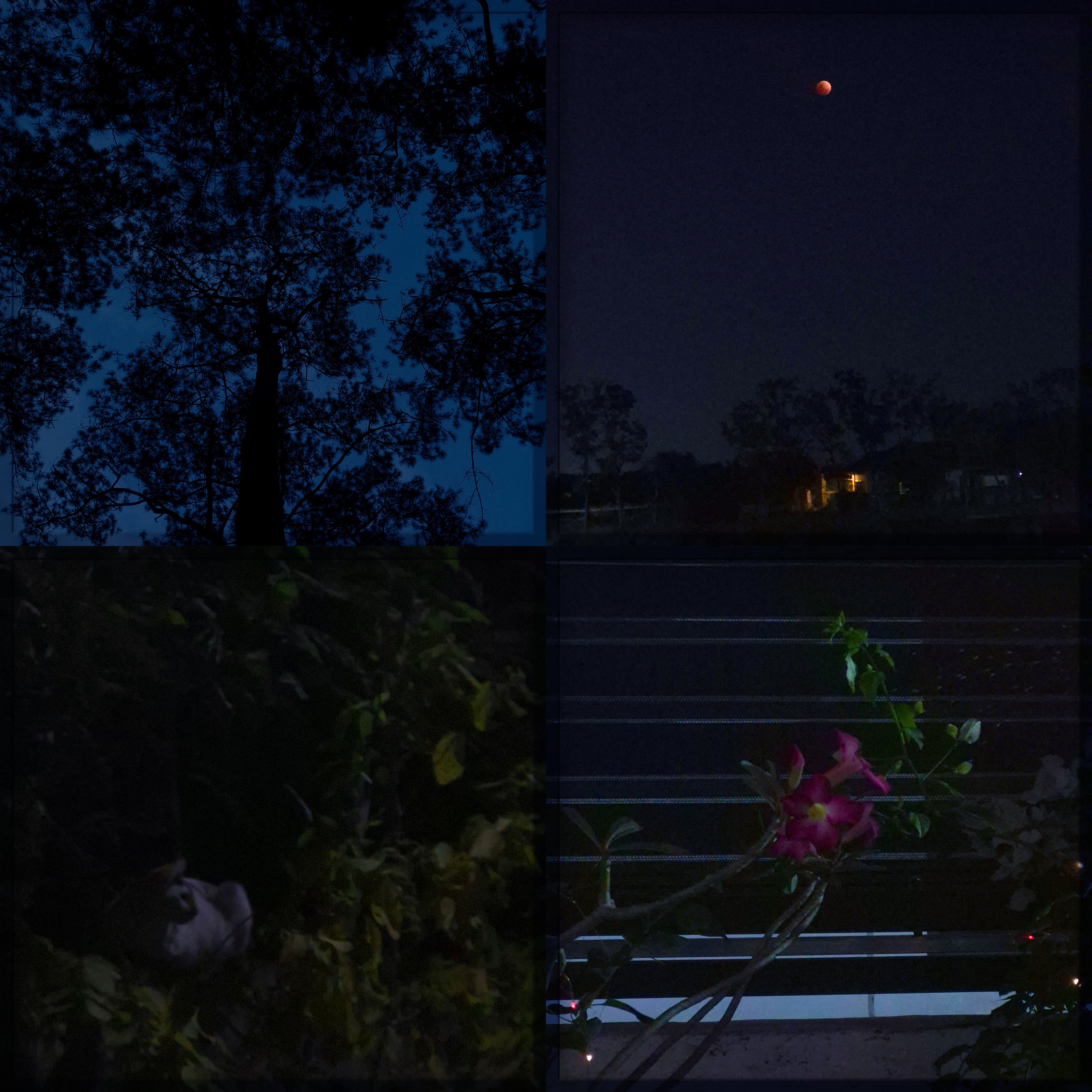
Scarce photons force the sensor to amplify—and amplification brings noise. ISO climbs, signal-to-noise ratio falls, and the quantum nature of light becomes visible as grain.

Night collage click to expand
Top-left
Blue hour: Dim light filtering through the silhouettes of tall trees.
Top-right
Lunar eclipse: A deep red "blood moon" caused by atmospheric refraction.
Bottom-left
Nocturnal visitor: Moonlight filtering through bushes onto a cat.
Bottom-right
Contrast: A bright pink flower standing out against the low-photon environment.

03 / 05
Street Lighting

Rain and Concrete Aromas

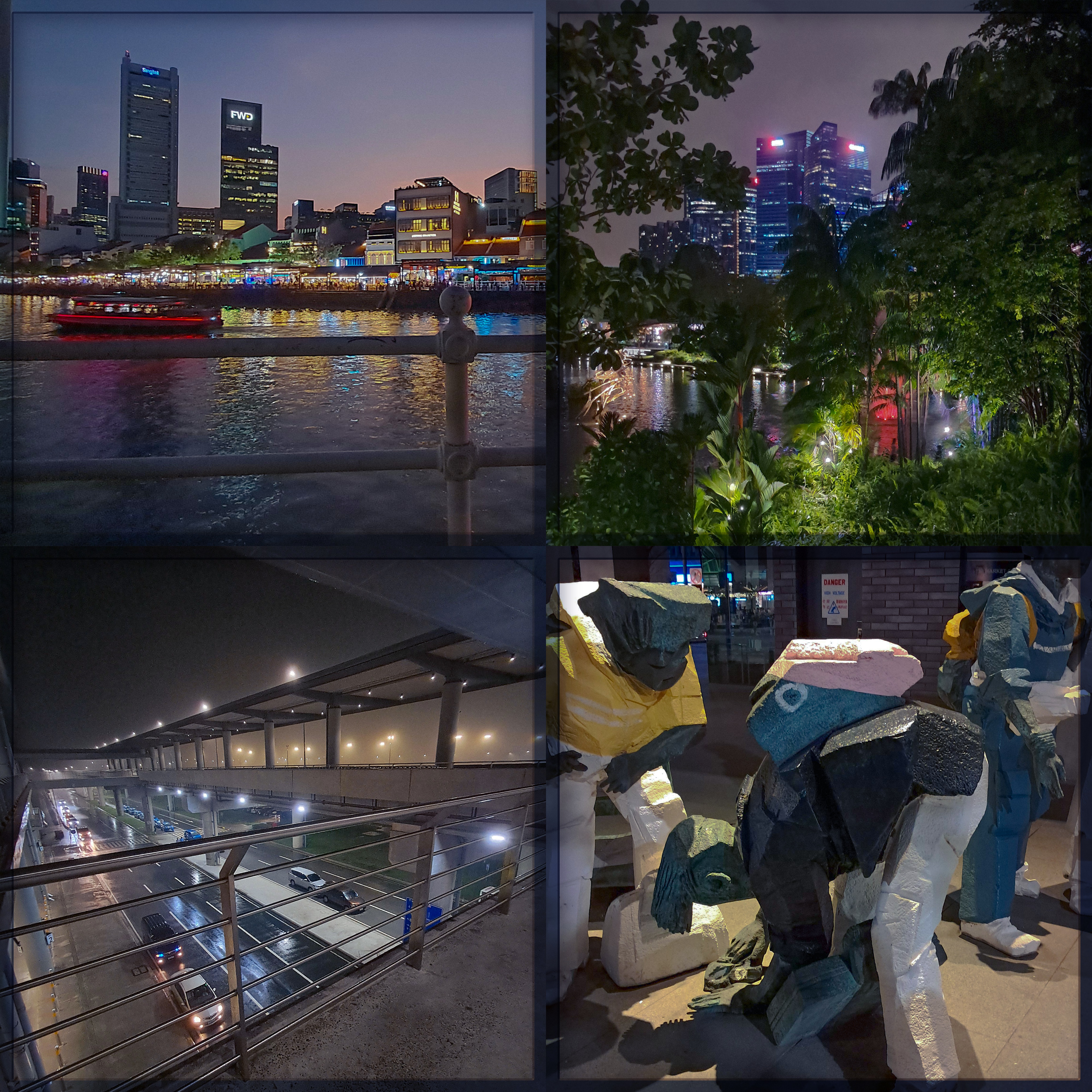
Sodium or LED street lamps emit narrow photon frequencies—the wave model predicts a spectral color cast, while the photon model explains limited sensor response.

Street light collage click to expand
Top-left
Winter solstice: Sharp streetlights creating crisp water reflections.
Top-right
Urban glow: Skyscrapers contributing to heavy city light pollution.
Bottom-left
Wet asphalt: Rainy weather enhancing the reflective wave-nature of the light.
Bottom-right
Urban Art: Streetlamps illuminating and reflecting off vibrant street model statues.

04 / 05
Indoor Lighting

Four Walls and a Bulb

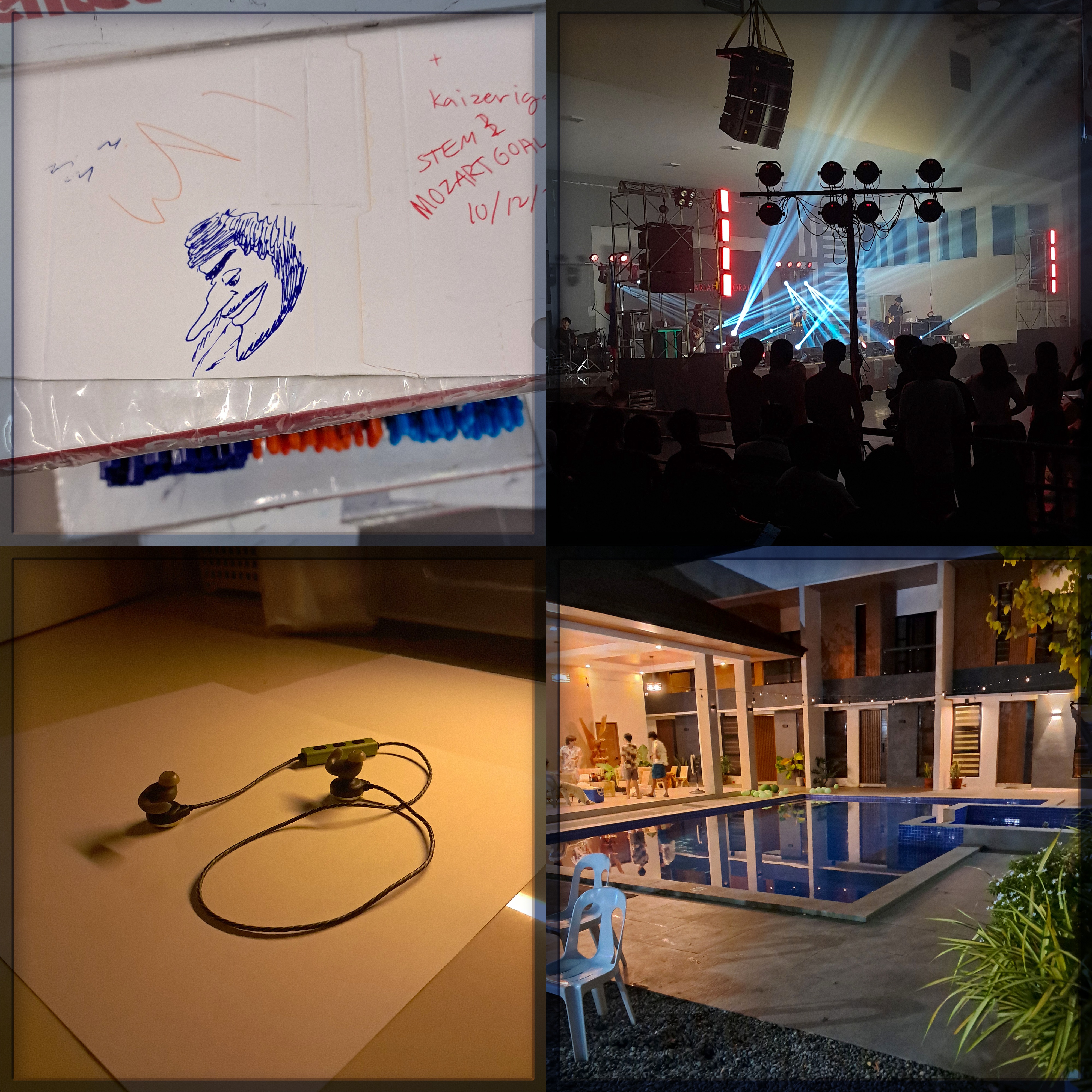
Artificial indoor light—tungsten, fluorescent, or LED—provides a controlled photon flux. Warm color temperatures shift the visible spectrum.

Indoor lighting collage click to expand
Top-left
Vandal: A small blue drawing of Blackbeard writing as the main subject against the harsh mall lighting.
Top-right
Spotlight: High-intensity concert beams cutting through the darkness.
Bottom-left
Ambience: Natural, warm fluorescent light filling a room.
Bottom-right
Pool party: Household lights reflecting across the surface of the water.

05 / 05
Screen Lighting

Digital Aura

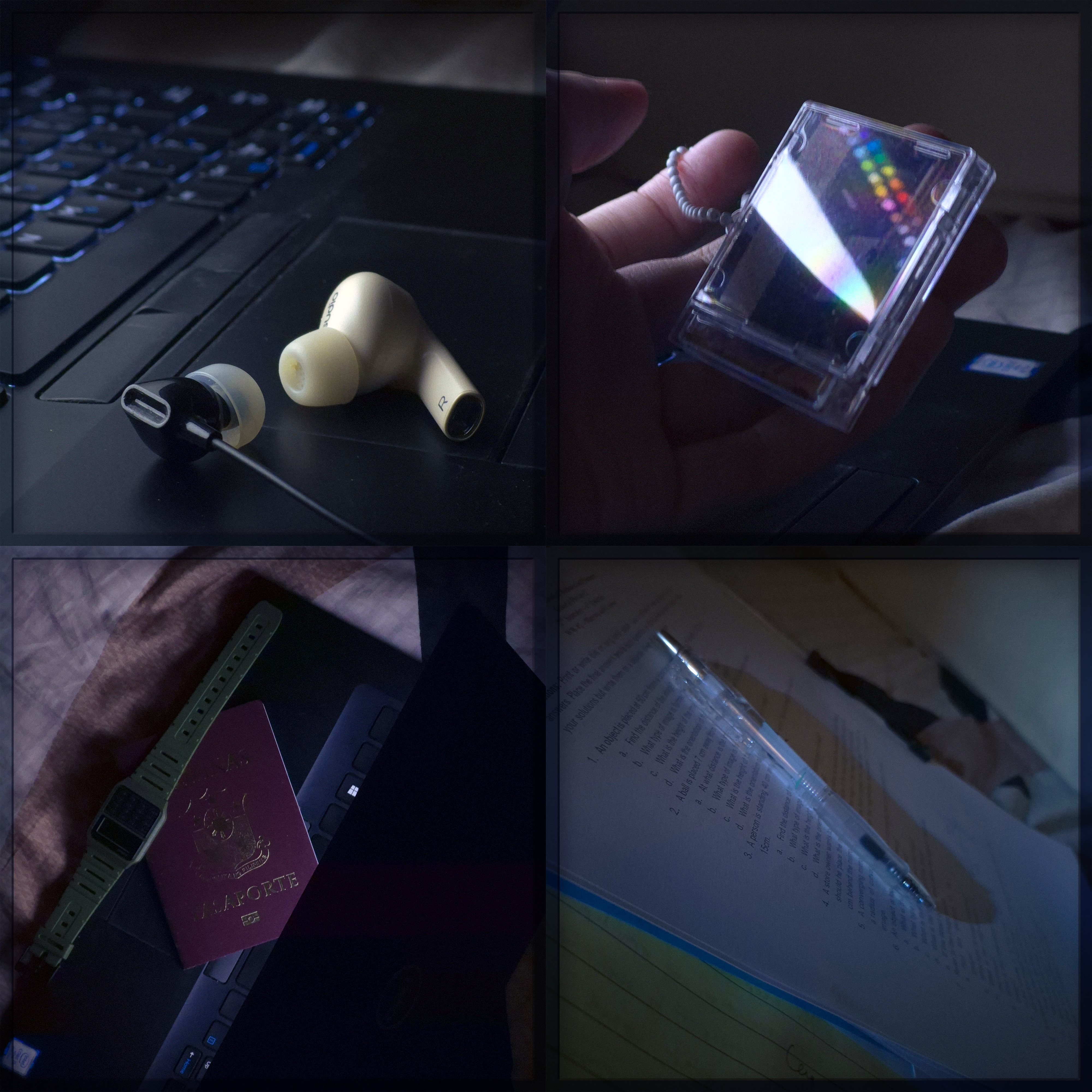
Screens emit discrete RGB photon wavelengths. The sensor receives a photon mix that mimics a broader spectrum, but glare reveals the wave nature.

Screen lighting collage click to expand
Top-left
Illumination: A bright laptop screen casting light onto a pair of earphones.
Top-right
Diffraction: Screen light reflecting and causing rainbow-like patterns.
Bottom-left
Depth: Laptop screen light casting sharp, digital shadows.
Bottom-right
Post-study: A screen illuminating a pen and paper in a dark room.

My
Reflection

The beauty in light is that you can't even see it as itself. You need an object and an eye to witness that very light that comes from either natural source—sun and fire—or artificial sources, like light bulbs and the pixels on your screen. To capture that specific light bouncing from an object means to use a lens and a sensor to focus that light into something converted to electrical signals and digital memories. That's why you can look back at that one photo of you and your friends years ago, even if the light has long exited the solar system; cameras fuel life's ephemeral relationship with memories. What gives, if your photos turn out grainy and noisy? That's light, or the lack thereof, sparsely hitting the sensors on your camera. You're more likely to win the lottery if you buy more tickets—that is, the more photons or "beams" of light that can enter the lens, the clearer, or "victorious" the final image will be. We spend our lives chasing 'good light,' not because we want better files, but because we want to prove we were there. Every clear photo is a mathematical victory over the void.
200 words